- Year
- 2010
- Project
- Cascading Creek
- Type
- Residential
- Area
- 5,600 SF
- Location
- Austin, TX
- Services
- Design | Construction
- About
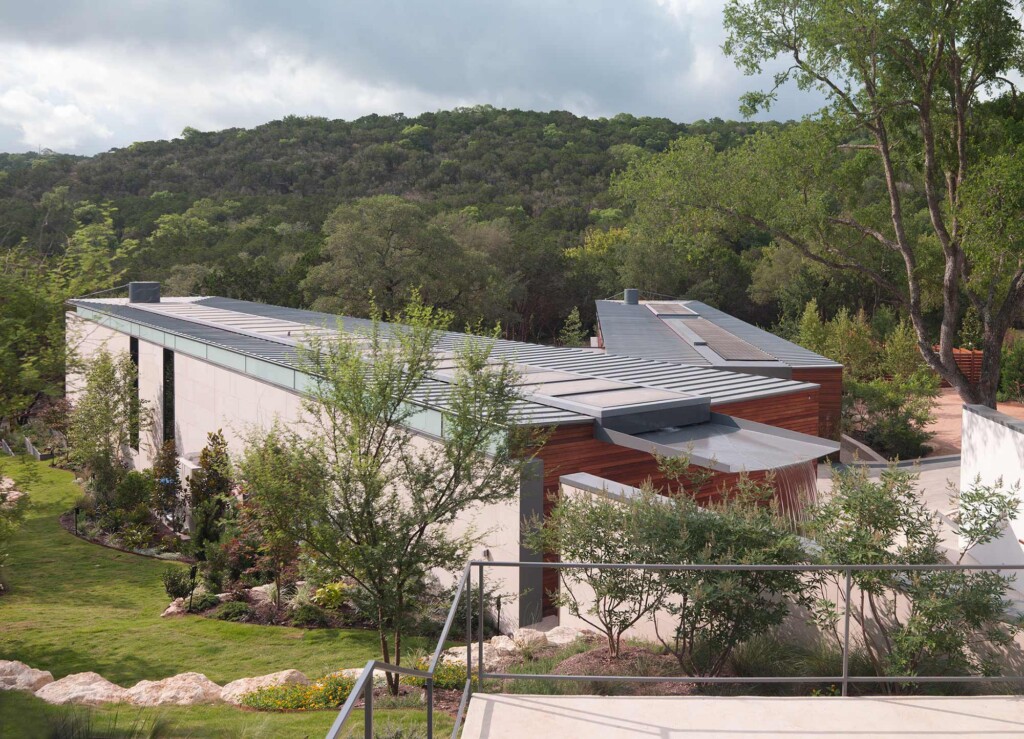
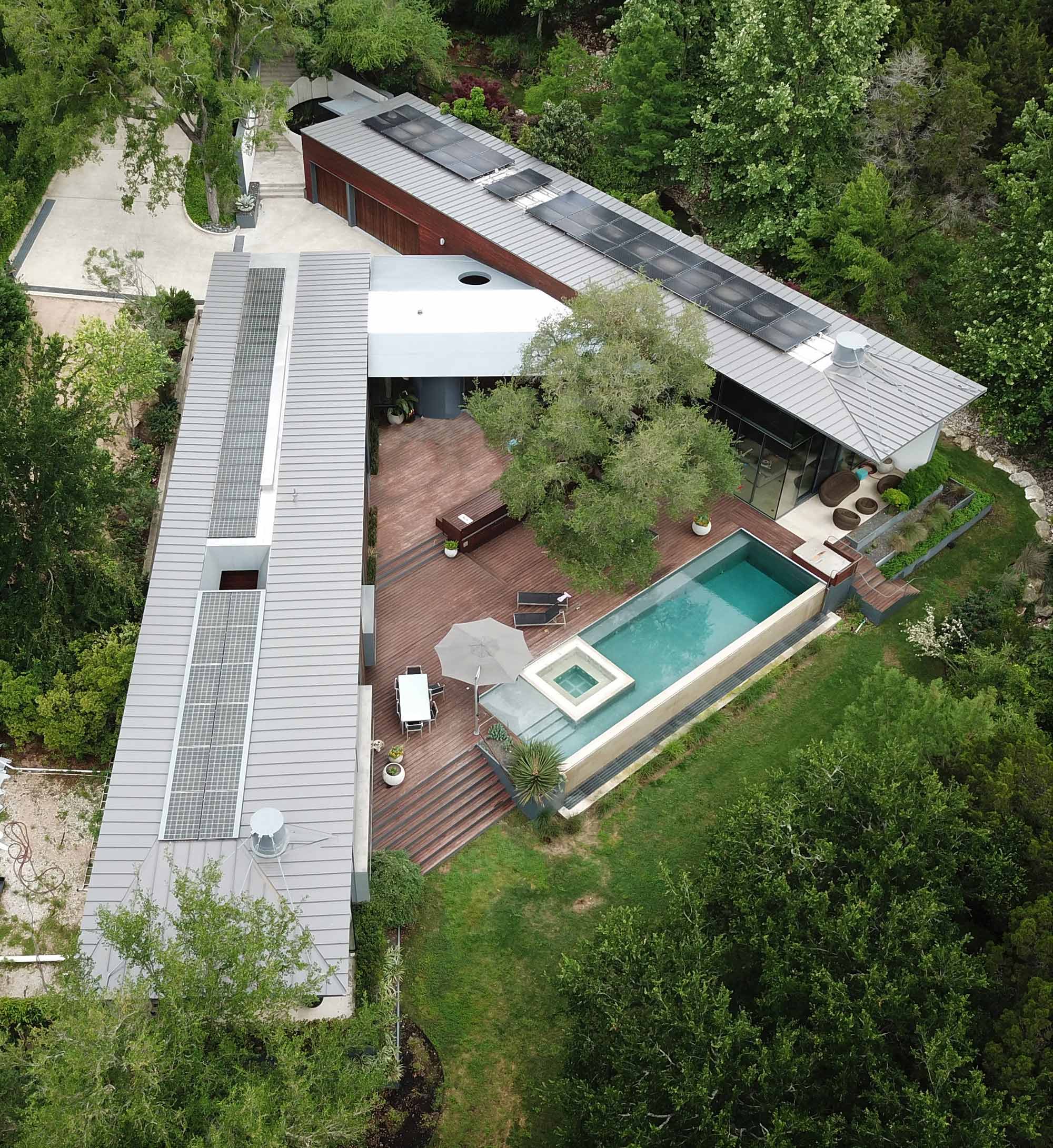
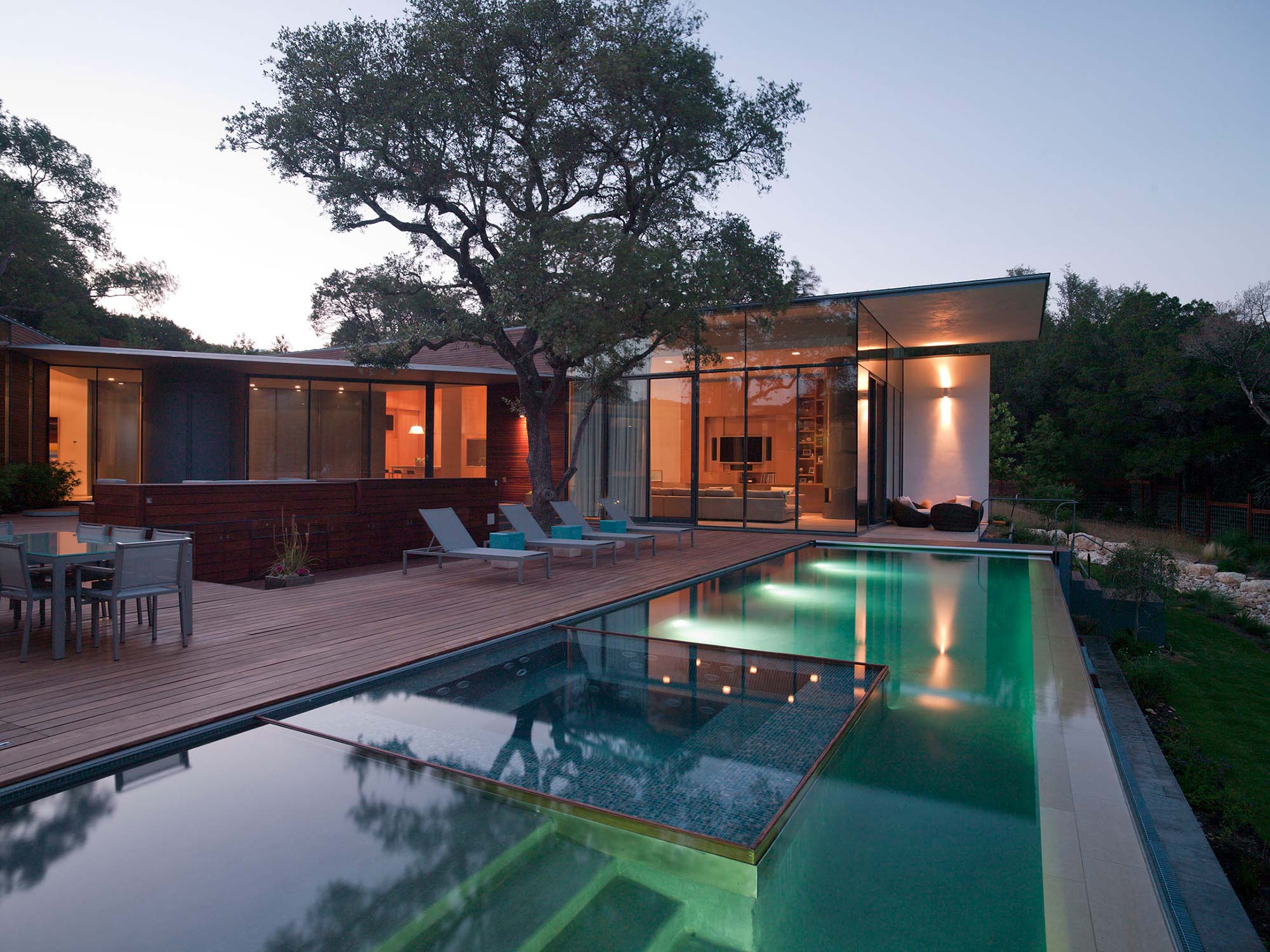
Cascading Creek House was conceived as an extension of the Central Texas landscape. Set within a limestone slope, the home draws inspiration from the aquifers and natural basins that shape the Hill Country. Its roof collects and filters rainwater through a series of shallow pools, while photovoltaic and solar hot-water systems harvest energy from the same surface. The roof becomes both shelter and ecosystem, supplying water and power while blending into the terrain.
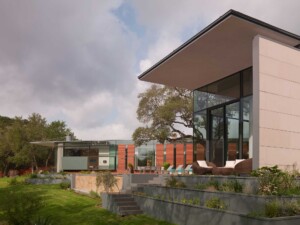
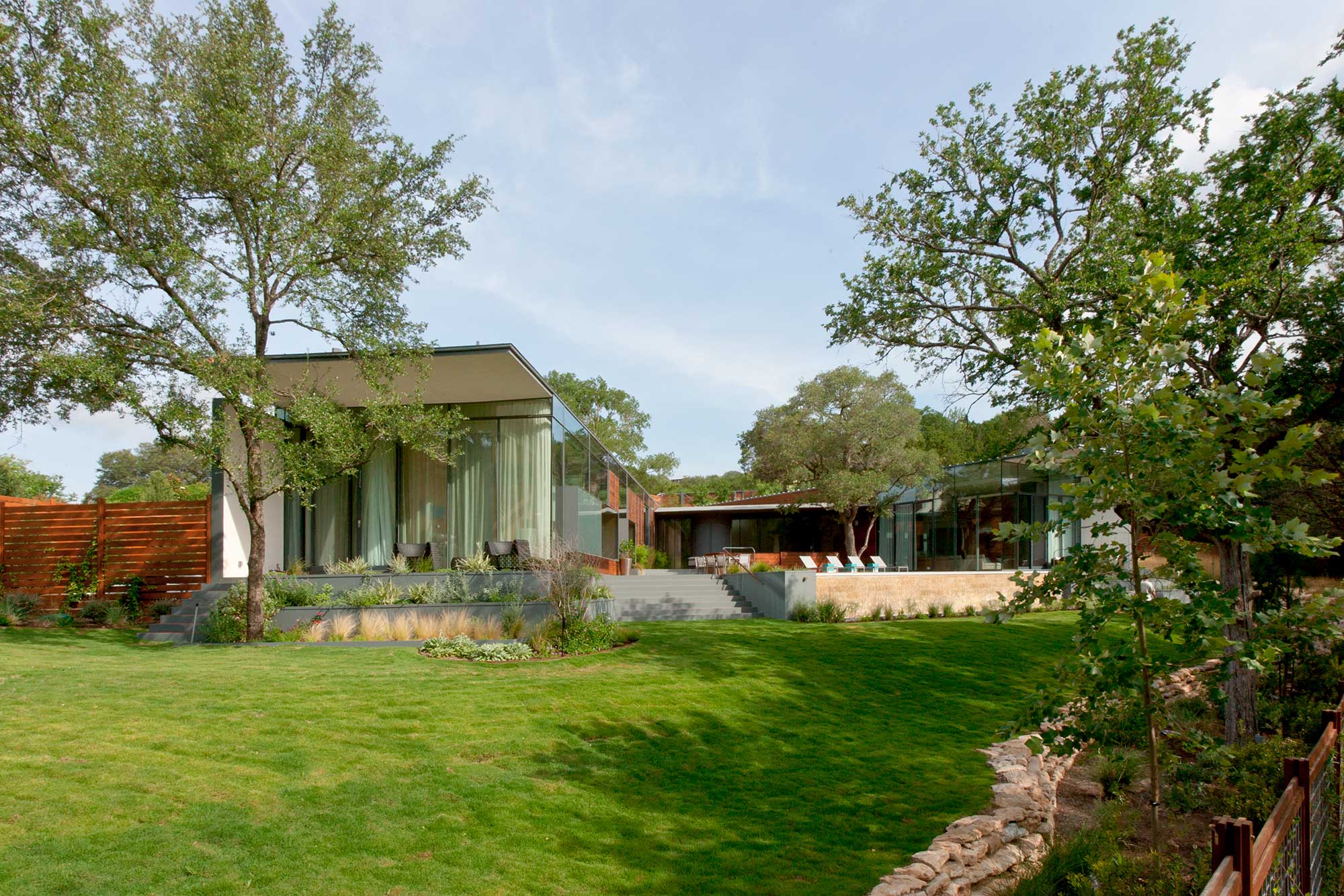
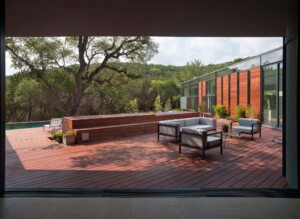
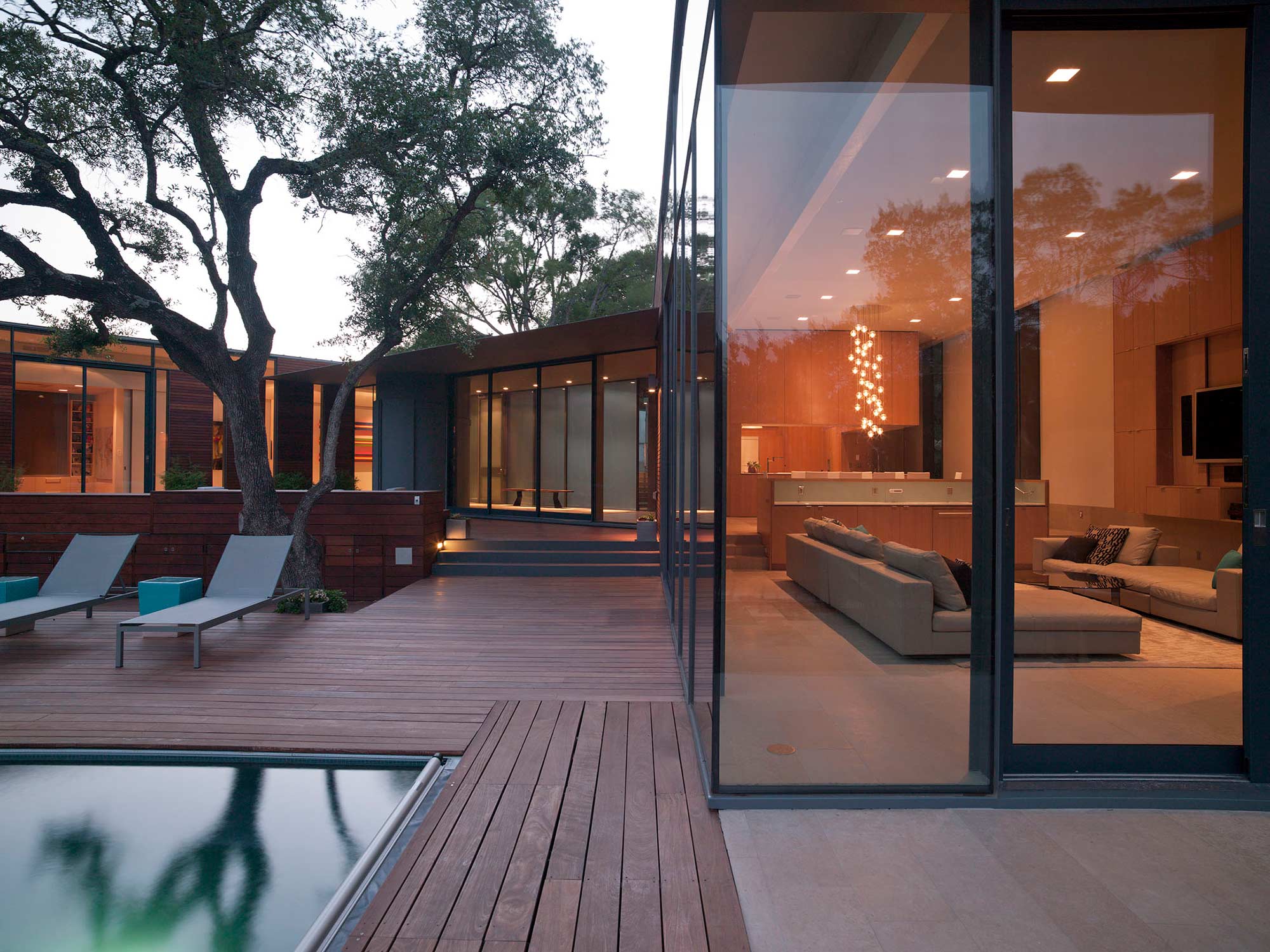
Two limestone walls organize the home into public and private wings, enclosing courtyards and protecting three mature oaks that define the site. The floor steps with the contours of the land, creating spaces that gradually open in height and light as they approach the view. At the edge, the roof extends outward on a single column, allowing the glass walls to dissolve into the landscape. In this final gesture, the house achieves a state of calm reciprocity, where the built and natural worlds meet in quiet continuity.
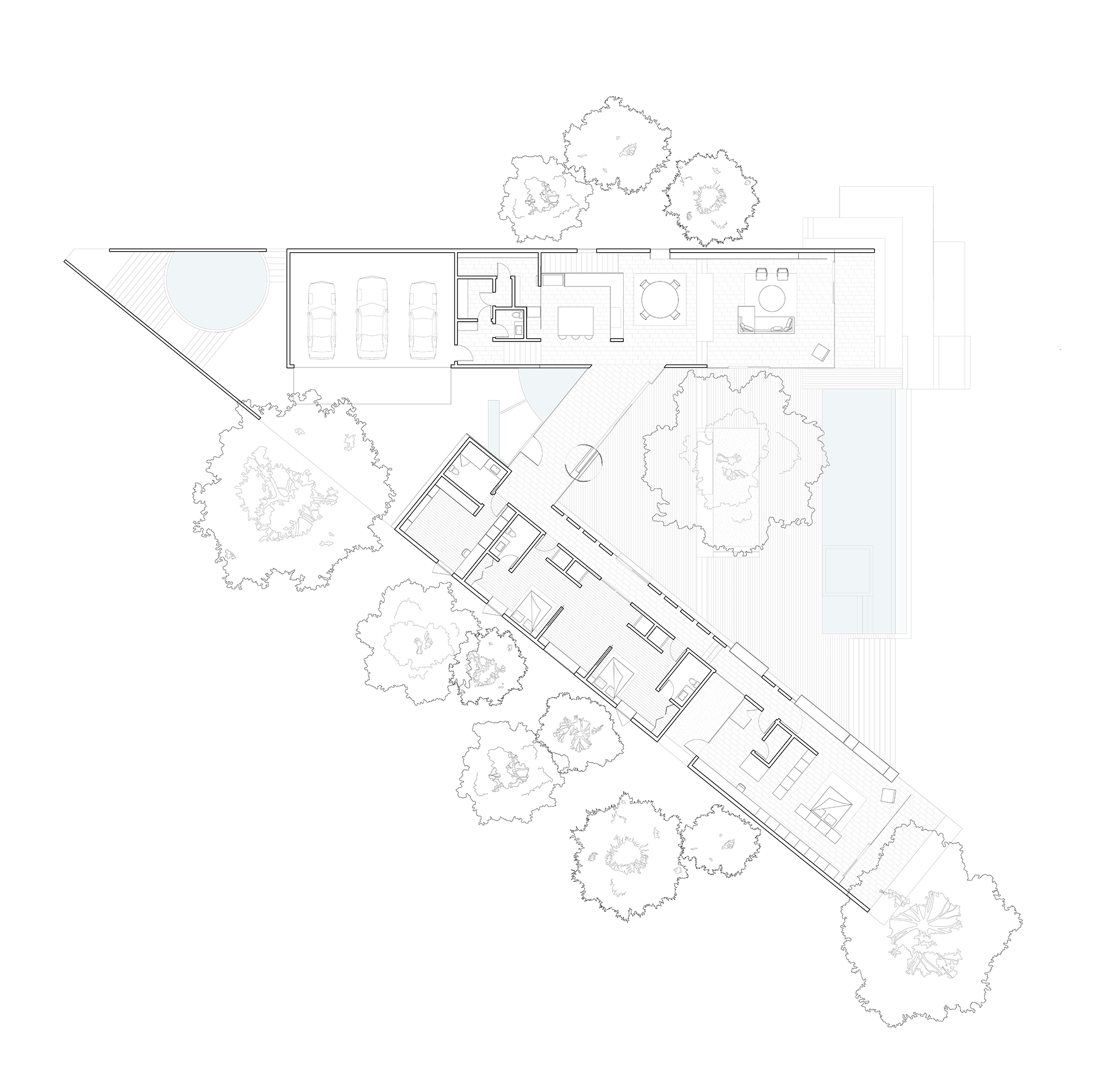
Level 1
The home’s mechanical systems share this sense of reciprocity with the land. Geothermal loops, radiant floors, and integrated pools operate together as a network of heat exchange, reducing dependence on conventional energy sources. From the street, the structure appears modest and grounded, but as it opens toward the creek, the architecture unfolds to reveal long horizontal planes that extend into the landscape. The building’s quiet restraint turns the focus outward, toward the trees, the slope, and the movement of water below.

Work Performed by Bercy Chen Studio
